
What Defines a Tropical Ambiance Venue | Guide
What Defines a Tropical Ambiance Venue | Guide
A tropical ambiance venue is a dining destination where lush vegetation, open-air architecture, natural materials, warm lighting, and sensory details converge to create an immersive environment rooted in its surrounding landscape.
This guide covers authentic tropical design principles, key architectural and material elements, climate-responsive layout strategy, the distinction between tropical and beach venues, menu and cocktail integration, dining experiences across dayparts, the role of location in authenticity, and the atmosphere details that complete the experience.
Authentic tropical design starts with layered greenery, from towering palms to ground-level ferns, that filters sunlight, softens noise, and surrounds guests in living texture. Open-air structures built from teak, bamboo, and marine-grade steel prioritize shade and airflow over decoration alone.
Core design elements include organic building materials, seamless indoor-outdoor floor plans, warm earthy color palettes, ambient lantern lighting, and woven natural furnishings. Each works in concert to dissolve the boundary between built space and garden.
Climate dictates every layout decision in subtropical regions. Shade comes first, then airflow, then cooling, then materials, then decoration. Venues that follow this hierarchy remain comfortable across all service hours.
Tropical venues differ from beach venues through canopy-driven shade, dense curated gardens, and layered botanical scents rather than open sand and direct waterfront sightlines. The sensory depth runs deeper.
A tropical menu reinforces the setting through locally sourced ingredients, shareable plates that encourage communal pacing, and fruit-forward cocktails that function as another layer of the experience. Brunch, happy hour, group celebrations, date nights, and family outings each thrive in garden environments built for lingering.
Location grounds authenticity. South Florida's subtropical climate and Coconut Grove's historic tree canopy provide the organic foundation that venues in other regions must manufacture.
What Makes a Venue Feel Authentically Tropical?
A venue feels authentically tropical when lush vegetation, open-air architecture, natural materials, warm lighting, and water proximity work together as a unified sensory experience. Each element below contributes a distinct layer to that atmosphere.
How Does Lush Vegetation Create a Tropical Atmosphere?
Lush vegetation creates a tropical atmosphere by surrounding guests with dense, layered greenery that engages sight, scent, and sound simultaneously. Towering palms establish vertical scale, while flowering shrubs and ground-cover plants fill the mid-level and floor planes. This layered canopy filters harsh sunlight, softens ambient noise, and introduces the gentle rustling that signals a natural environment. Venues that commit to mature, well-maintained tropical plantings, rather than sparse potted accents, produce an immersive quality that guests instinctively associate with island landscapes. In my experience, the density of the planting is what separates a truly tropical setting from one that merely references it with a few token palms.
What Role Does Open-Air Design Play in Tropical Ambiance?
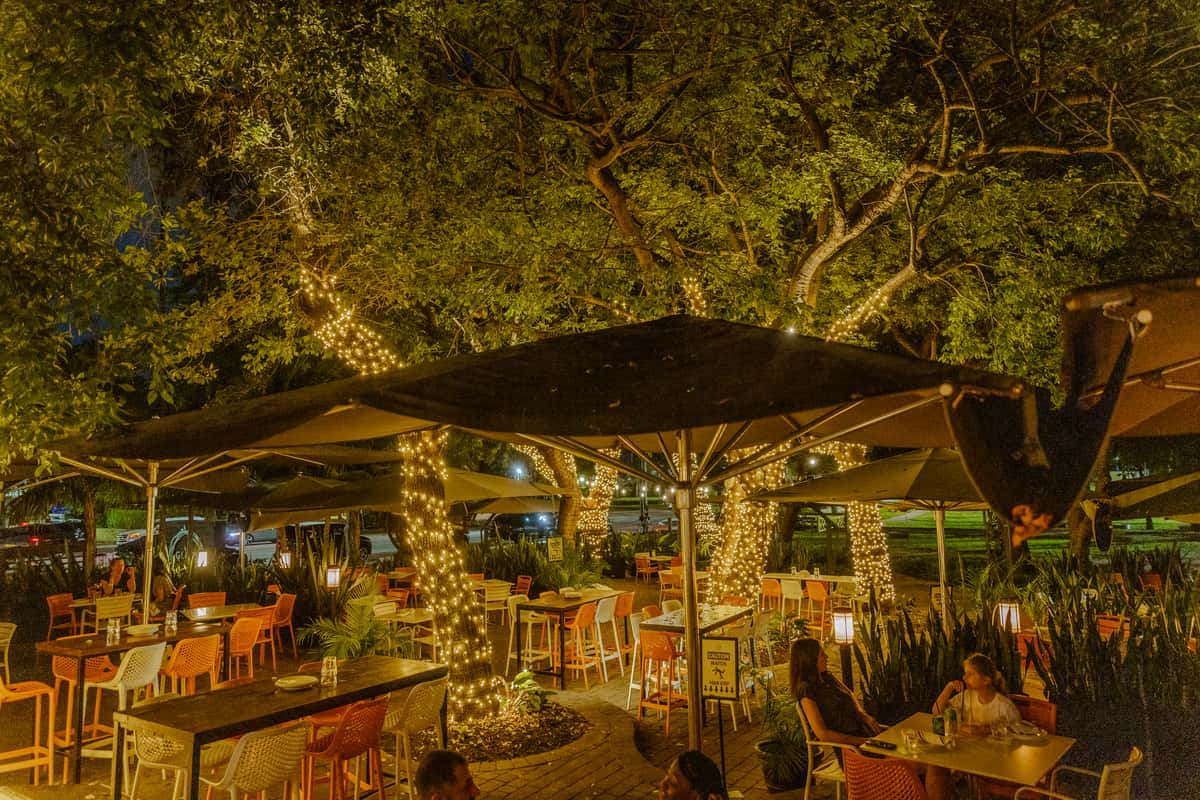
Open-air design plays the central structural role in tropical ambiance by dissolving the barrier between indoors and outdoors. According to a Mist System outdoor restaurant design guide, the best tropical outdoor restaurants follow a common design logic: shade first, airflow second, cooling third, materials fourth, and decoration last. This hierarchy prioritizes guest comfort over aesthetics alone.
Effective open-air tropical venues address several structural considerations:
- Thatched umbrellas and pergolas define distinct seating zones while maintaining an airy, unenclosed feel.
- High-performance synthetic thatch meets commercial fire safety standards after testing for 10,000 hours of sun exposure.
- Stainless steel 316 marine grade is required for metal fixtures in coastal humidity, as standard steel corrodes within months.
- Teak and merbau hardwoods resist moisture, insects, and UV exposure, lasting 15 to 20 years in tropical conditions.
How Does Natural Light Shape the Tropical Experience?
Natural light shapes the tropical experience by creating a dynamic atmosphere that shifts throughout the day. Morning sunlight filtered through tree canopies produces dappled patterns across tables and floors, while golden-hour warmth intensifies the lush greens of surrounding foliage. This constant, subtle change in light quality gives tropical venues a living character that fully enclosed spaces cannot replicate. As daylight fades, warm color temperatures between 2700K and 3000K should replace it, since cool white light feels clinical in outdoor settings. The most compelling tropical venues treat light as a design material, positioning seating to capture the best angles at each daypart.
Why Is Water Proximity Important for Tropical Venues?
Water proximity is important for tropical venues because it activates auditory and visual cues that the brain associates with coastal and island environments. The sound of moving water, whether from a bay shoreline, a fountain, or a reflecting pool, lowers perceived stress and encourages guests to linger. Even the view of water across a landscape creates depth and openness that reinforces the sense of escape.
Practically, water proximity also introduces moisture management requirements. According to Mist System's outdoor restaurant design guide, outdoor surfaces need to slope at a 1 to 2 percent grade toward drainage channels, because flat surfaces pool water, create slip hazards, and accelerate material degradation. Venues near water must treat drainage as a foundational design element, not an afterthought.
How Do Natural Materials Reinforce a Tropical Setting?
Natural materials reinforce a tropical setting by providing textures, tones, and aging characteristics that synthetic alternatives cannot replicate. According to Karya Exindo Prima, teak is naturally weather-resistant due to its high oil content, making it one of the most durable and reliable materials for outdoor furniture with exceptional long-term performance.
Key natural materials used in tropical venue design include:
- Teak: Weathers to a silver-grey patina over time; resists moisture, insects, and UV exposure.
- Bamboo: Adds depth and character through pole backdrops and lattice work when treated with borax solution.
- Rattan and wicker: Provide woven textures for seating and accent pieces that soften hard architectural lines.
- Stone and coral: Ground the space with cool, tactile surfaces underfoot.
The imperfections and natural variation in these materials signal authenticity in a way that uniform, manufactured finishes simply cannot. Beyond lighting and materials, the finer sensory details of a tropical venue complete the experience.
What Are the Key Design Elements of a Tropical Venue?
The key design elements of a tropical venue include lush landscaping, organic building materials, seamless indoor-outdoor flow, warm color palettes, ambient lighting, and woven natural furnishings. Each element works together to create an immersive environment.
Tropical Landscaping and Garden Integration
Tropical landscaping integrates dense, layered vegetation directly into a venue's architecture to blur the boundary between built space and nature. Designers use canopy trees, mid-story palms, and ground-level ferns to create depth and enclosure. Strategic plant placement also provides natural shade and temperature regulation, making gardens functional rather than purely decorative. In settings like Glass & Vine, where dining occurs beneath a mature oak canopy in Peacock Park, the landscape itself becomes the primary architectural feature. Effective tropical garden integration treats plants as structural elements, not afterthoughts.
Organic and Sustainable Building Materials
Organic and sustainable building materials form the structural foundation of any tropical venue. According to iGroup Design, organic architecture emphasizes harmony with nature, using natural materials and forms to create buildings that blend seamlessly with their surroundings. Treated bamboo, preserved with borax and boric acid solution, lasts 8 to 12 years in exposed tropical conditions while serving as ceilings, structural supports, and decorative screens. Stone, reclaimed wood, and coral-based finishes complement bamboo by adding textural contrast. Choosing materials that weather gracefully, rather than deteriorate, is one of the smartest long-term investments a tropical venue can make.
Indoor-Outdoor Flow and Open Floor Plans
Indoor-outdoor flow relies on open floor plans that minimize dividing walls to create spaciousness and visual connection between different areas within a space, as defined by iGroup Design. Retractable glass walls, covered terraces, and continuous flooring materials help erase the threshold between interior dining rooms and garden patios. This design approach allows natural breezes to circulate freely while giving guests the flexibility to move between sheltered and open-air seating. For South Florida venues, where mild weather persists year-round, open floor plans maximize usable square footage across every season.
Warm and Earthy Color Palettes
Warm and earthy color palettes anchor the visual identity of tropical venues. Terracotta, sand, olive green, burnt sienna, and deep coral tones reference the natural landscape without competing with surrounding vegetation. Neutral base colors on walls and flooring allow lush greenery and sunset light to serve as the dominant visual accents. Bold tropical hues, such as turquoise or hibiscus pink, work best in small doses through cushions, ceramics, or artwork rather than large surfaces.
Ambient Lighting and Lantern Features
Ambient lighting and lantern features establish a tropical venue's mood after sundown. Warm color temperatures between 2,700K and 3,000K produce a soft golden glow that feels inviting rather than clinical in outdoor settings. Common fixture types include:
- String lights draped through tree canopies for diffused overhead warmth.
- Lanterns placed on tables and pathways to create intimate, low-level pools of light.
- Uplighting directed at palms and architectural features to add vertical drama.
- Candles or LED flame elements for flickering movement that mimics firelight.
Layering these sources at multiple heights prevents flat, even illumination and creates the dynamic shadows that make tropical evenings feel alive.
Woven Textures and Natural Furnishings
Woven textures and natural furnishings bring tactile warmth to tropical venue interiors. Rattan chairs, wicker pendants, jute rugs, and macramé wall hangings introduce handcrafted character that synthetic materials cannot replicate. These elements reinforce the organic design philosophy by connecting guests physically to natural fibers. Mixing woven pieces with solid wood tables and linen upholstery prevents visual monotony while maintaining cohesion. For any venue committed to authentic tropical ambiance, furnishings should feel gathered from nature rather than ordered from a catalog. Understanding how climate conditions shape these design choices further refines material and layout decisions.
How Does Climate Influence Tropical Venue Design?
Climate influences tropical venue design by making airflow, shade, and material resilience the primary structural priorities. In regions with consistent heat and humidity, every layout decision must respond to weather conditions before aesthetics.
According to a Mist System outdoor restaurant design guide, the single most common mistake in tropical outdoor restaurant design is treating layout as a visual exercise; in climates where ambient temperatures reach 33–35 degrees Celsius daily, airflow is the primary design constraint. This principle shapes everything from table spacing to roof structure. Venues that prioritize ventilation, rain drainage, and sun protection create spaces guests can comfortably use throughout the day, while those that lead with decoration often struggle with unusable seating during peak heat hours.
The best tropical outdoor restaurants follow a common design logic: shade first, airflow second, cooling third, materials fourth, and decoration last. For a venue like Glass & Vine in Coconut Grove, where South Florida's subtropical humidity is a year-round factor, this hierarchy ensures that the dining experience remains comfortable regardless of season. Glass & Vine's placement beneath Peacock Park's mature oak canopy provides natural shade as the primary structural element, with the open-air design allowing subtropical breezes to circulate freely through the garden seating area throughout the day.
Understanding climate as the starting point, rather than an afterthought, distinguishes venues that deliver genuine tropical ambiance from those that merely look the part.
What Distinguishes a Tropical Venue from a Beach Venue?
A tropical venue is distinguished from a beach venue by its layered garden environment, canopy-driven shade, and sensory depth, while a beach venue relies primarily on direct waterfront access and open sand aesthetics. The differences span landscaping, shade strategy, scent, and overall atmosphere.
A tropical venue surrounds guests with dense, curated vegetation. Palms, frangipani, and broad-leaf canopies create enclosed, garden-like spaces where shade is structural rather than optional. According to Mist System's outdoor restaurant design guide, a large frangipani or ketapang canopy can reduce ground temperatures by 8 to 12 degrees compared to exposed hardscape, making living shade from mature trees the most effective thermal solution in tropical venues. Beach venues, by contrast, tend toward minimal landscaping to preserve sightlines to the water.
Maintenance expectations also differ. Tropical venues invest in lush canopy trees and self-cleaning palms, varieties where older fronds fall away naturally without pruning. This sustained greenery forms the venue's identity. Beach venues prioritize sand management, wind barriers, and saltwater corrosion resistance instead.
Scent plays a defining role in separating the two concepts. Tropical venues layer botanical aromas, such as coconut and frangipani with hints of sea breeze, that can instantly reduce stress according to a report by the Economic Times on scent marketing in hospitality. Beach venues carry salt air and ocean spray as their dominant scent profile, which is pleasant but less intentionally designed.
The sensory contrast extends to how shade shapes usability. Without shade, outdoor seating becomes unusable during peak midday hours, costing venues significant service time. Tropical venues solve this through canopy architecture and pergola systems. Beach venues often accept partial-day limitations or rely on umbrellas and temporary structures.
For venues like Glass & Vine in Coconut Grove, the tropical distinction is clear: a garden canopy beneath Peacock Park's oaks creates an immersive environment that no open-sand setting can replicate. Understanding these sensory and structural layers helps clarify how tropical menu design further reinforces the overall ambiance.
How Does a Tropical Menu Complement the Ambiance?
A tropical menu complements the ambiance by reinforcing the sensory experience through flavor, presentation, and communal dining rituals. Locally sourced ingredients, shareable plates, and fruit-forward cocktails each play a distinct role.
How Do Locally Sourced Ingredients Enhance Tropical Dining?
Locally sourced ingredients enhance tropical dining by connecting the plate to the surrounding environment. When a restaurant in Coconut Grove features South Florida produce, seafood, and herbs, the food mirrors the lush setting guests see around them. According to Flavor Magazine, tropical fruits are excellent bar ingredients because nearly the whole fruit can be used, from juicing the flesh to making syrups from the skins and using the tops as cocktail garnishes. This zero-waste versatility means a single mango or pineapple can appear across multiple dishes and drinks, weaving a consistent tropical thread through the entire menu. Glass & Vine's all-day menu showcases this approach with locally-sourced ingredients that change with South Florida's seasons, creating dishes designed for sharing that reflect the same natural abundance visible in the surrounding garden setting. For venues like Glass & Vine, sourcing locally also shortens the gap between harvest and service, which keeps flavors vibrant.
Why Are Shareable Plates Suited to Tropical Settings?
Shareable plates are suited to tropical settings because communal dining mirrors the relaxed, unhurried pace that warm-weather environments naturally encourage. Passing dishes around a table slows the meal, giving guests more time to enjoy the garden views, open air, and conversation. Shared plates also showcase a wider variety of tropical flavors in a single sitting, from ceviches and grilled seafood to bright, fruit-based sides. This format turns dinner into a social ritual rather than a transactional experience. At a venue surrounded by park canopy and natural light, that collective rhythm feels instinctive rather than forced.
How Do Tropical Cocktails Contribute to the Atmosphere?
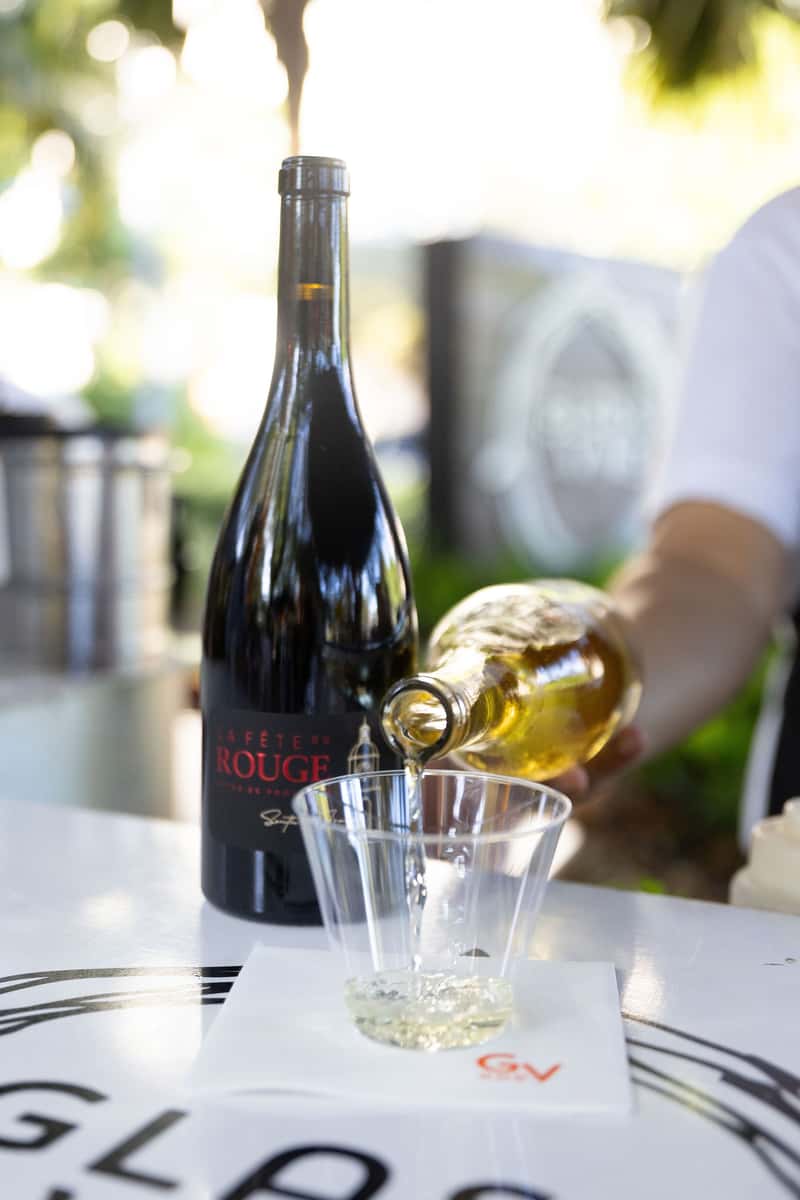
Tropical cocktails contribute to the atmosphere by extending the venue's sensory identity into the glass. A well-crafted rum punch or passionfruit spritz reinforces the same visual and aromatic cues guests absorb from the landscaping and decor. According to Flavor Magazine, a tropical drink can complement food and help lessen the heat on spicy dishes, with tropical cocktails considered another ingredient to the food itself. This pairing role means cocktails do more than refresh; they balance and complete each course. Vibrant garnishes and colorful presentations add to the visual richness of the table, making every round feel like part of the setting.
Beyond design and greenery, the dining experiences a tropical venue supports reveal how effectively its atmosphere works in practice.
What Kind of Dining Experiences Thrive in Tropical Venues?
Tropical venues thrive with dining experiences that leverage natural surroundings across multiple dayparts. Brunch, happy hour, group celebrations, date nights, and family outings each benefit from garden settings, open-air layouts, and relaxed atmospheres.
How Does Brunch Pair with a Tropical Garden Setting?
Brunch pairs with a tropical garden setting by aligning morning light and lush greenery with the leisurely pace of midday dining. According to Synergy Restaurant Consultants, a daypart is a defined period of restaurant service, such as breakfast, brunch, lunch, or happy hour, with each period depending on the concept. Brunch thrives in garden environments because morning sunlight filters through canopy trees, and the natural surroundings activate what researchers call biophilia, our innate connection with nature. Tropical brunch menus often incorporate bold flavors, from fresh ceviches to pineapple-accented dishes, that feel natural when enjoyed outdoors. For venues like Glass & Vine in Coconut Grove, where oak canopy and garden landscaping frame the dining space, brunch becomes an immersive sensory experience rather than just a meal.
Why Are Happy Hour Gatherings Popular at Tropical Venues?
Happy hour gatherings are popular at tropical venues because the late-afternoon transition from daylight to dusk creates an atmosphere that indoor bars cannot replicate. Cooling breezes, warm ambient lighting, and garden surroundings encourage guests to linger. Tropical cocktails made from whole fruits, including juices, skin-based syrups, and garnishes from the same ingredient, complement this relaxed window perfectly. The social, unhurried energy of a tropical setting naturally aligns with what happy hour is designed to do: slow the pace and reward the end of a workday. In a neighborhood like Coconut Grove, where the outdoor lifestyle is second nature, this daypart consistently draws both locals and visitors.
How Do Tropical Venues Accommodate Group Celebrations?
Tropical venues accommodate group celebrations by offering flexible open-air spaces that adapt to different party sizes without feeling confined. Garden layouts with distinct seating zones allow large groups to gather while still maintaining an intimate feel. Shared plates, which are central to many tropical menus, encourage communal dining that suits birthdays, reunions, and milestone events. The natural backdrop of palms, string lights, and canopy shade provides built-in décor that most indoor event spaces cannot match. Glass & Vine in Peacock Park, for instance, uses its garden setting to host gatherings where the environment itself becomes part of the celebration.
What Makes a Tropical Venue Ideal for Date Nights?
A tropical venue is ideal for date nights because the combination of soft ambient lighting, garden seclusion, and open-air warmth creates natural romance without forced formality. Candlelit tables under tree canopy provide intimacy, while the sounds of rustling leaves and gentle breezes replace the noise of enclosed dining rooms. Cocktail programs built around tropical ingredients add a sense of discovery to the evening. The relaxed sophistication of a place like Glass & Vine, where pretense falls away beneath the oaks of Coconut Grove, makes it especially well suited for couples seeking a memorable, unhurried dinner.
How Do Family-Friendly Features Fit a Tropical Venue?
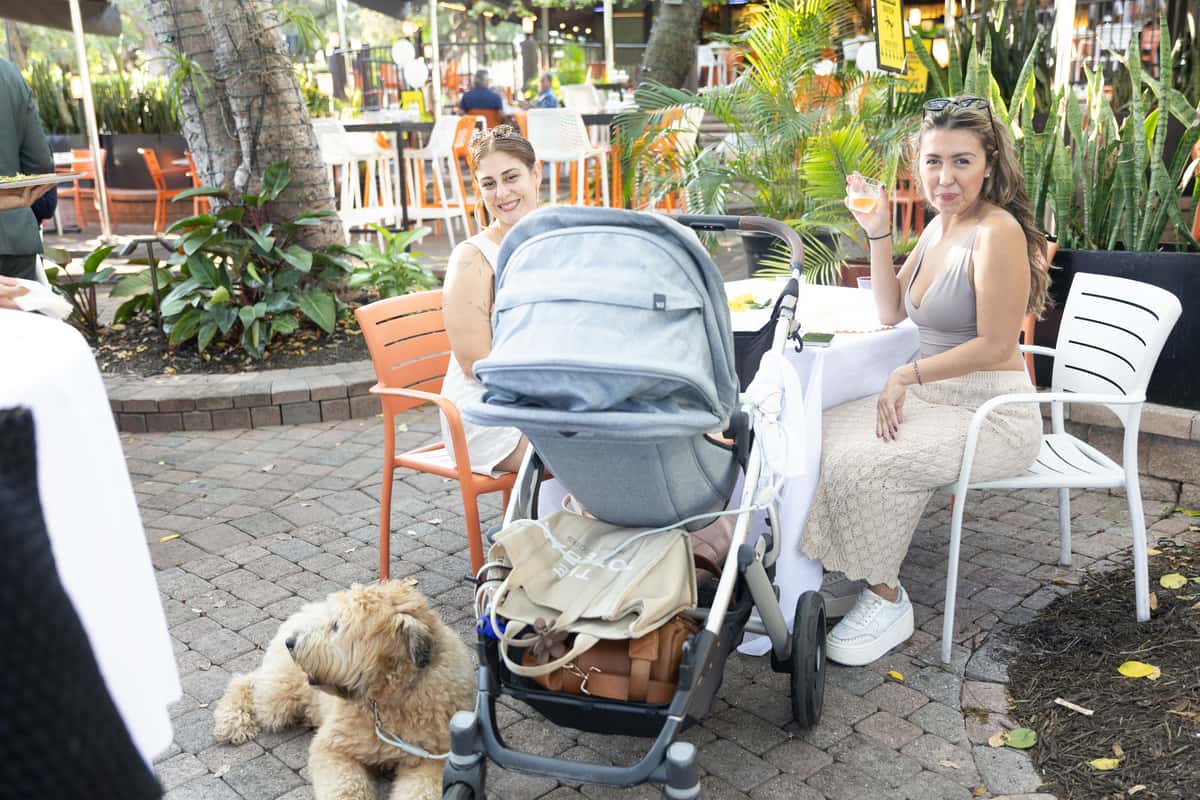
Family-friendly features fit a tropical venue naturally because the open-air, garden-oriented layout gives children space to move while parents enjoy their meal. Proximity to playgrounds, dedicated kids' menus, and relaxed patio seating all reduce the stress that often accompanies family dining. Pet-friendly policies extend this welcoming atmosphere further; the American Pet Products Association reported that 66 percent of U.S. households owned a pet in 2024, making dog-accommodating venues increasingly important for attracting families. Glass & Vine embraces this fully with a playground-adjacent setting, a dedicated doggy menu, and a kids' menu, creating a tropical experience where every member of the family, including four-legged ones, feels welcome.
Understanding which dining experiences suit tropical venues helps clarify how the surrounding location shapes that ambiance even further.
How Does Location Affect a Tropical Venue's Authenticity?
Location affects a tropical venue's authenticity by determining whether the climate, vegetation, and cultural context naturally support the experience or require artificial recreation. South Florida's subtropical environment and Coconut Grove's historic, tree-canopied character illustrate this connection.
Why Is South Florida a Natural Fit for Tropical Venues?
South Florida is a natural fit for tropical venues because its subtropical climate, native vegetation, and year-round warmth eliminate the need for manufactured tropical elements. Lush palms, sea breezes, and warm humidity exist organically here, giving outdoor dining spaces an inherent authenticity that venues in cooler regions must simulate through artificial landscaping and climate control.
The region's appeal extends well beyond locals. According to the Executive Office of the Governor of Florida, the state welcomed 143.3 million visitors in calendar year 2025, with domestic travelers accounting for 91.5 percent of all visitation. That massive tourism pipeline means tropical restaurants in South Florida serve an audience already primed for the experience. Guests arrive expecting warmth and lush surroundings, so the environment validates the design rather than contradicting it. Few regions offer that kind of built-in alignment between setting and concept.
What Makes Coconut Grove an Ideal Tropical Dining Destination?
Coconut Grove is an ideal tropical dining destination because its dense tree canopy, bayfront proximity, and historic village character create a setting that feels genuinely tropical without contrivance. Mature oak and banyan trees provide living shade, while the neighborhood's walkable streets and waterfront parks reinforce a relaxed, open-air lifestyle.
This is where a venue's surroundings become part of the experience itself. SWA Group's hospitality design philosophy emphasizes that ecological sensitivity and place-based design distill the personality of each location, noting that connection with nature has become foundational as travelers seek experiences grounded in authenticity. Coconut Grove embodies this principle naturally. Glass & Vine, nestled beneath Peacock Park's canopy, draws its tropical character directly from the Grove's centuries-old landscape rather than importing it.
With location grounding the experience, the finer atmosphere details complete what makes a tropical venue memorable.
What Atmosphere Details Elevate a Good Tropical Venue?
Atmosphere details elevate a good tropical venue by engaging senses beyond sight, including sound, scent, and the emotional comfort of inclusive policies. The following sections explore how music, fragrance, and pet-friendly environments shape a complete tropical experience.
How Does Music Selection Set a Tropical Mood?
Music selection sets a tropical mood by layering rhythmic, warm sounds that reinforce the visual and sensory environment. Genres rooted in tropical regions, such as bossa nova, reggae, calypso, and Afro-Caribbean rhythms, create an auditory backdrop that transports guests. Tempo matters as much as genre; slower, mid-tempo tracks encourage lingering and relaxation, while upbeat rhythms energize happy hour or brunch settings. Volume should remain low enough for conversation, allowing the music to blend with natural sounds like rustling leaves or birdsong rather than competing with them. The best tropical venues treat their playlist as a design element, shifting it across dayparts to match the evolving energy of the space.
Why Does Scent Matter in a Tropical Environment?
Scent matters in a tropical environment because fragrance directly influences how guests feel and what they remember. According to Aire-Master, smells tap into the limbic system, where the brain processes mood and memory, which is why fragrances evoke strong recollections and hospitality marketers use them to create lasting impressions. In a tropical setting, naturally occurring aromas from flowering plants, fresh herbs, and salt air do much of this work organically. Venues that cultivate fragrant landscaping, such as jasmine, plumeria, or frangipani near seating areas, reinforce the tropical identity without artificial diffusion. Scent is often the most underestimated atmospheric layer, yet it is the one guests recall most vividly long after they leave.
How Do Pet-Friendly Policies Add to a Relaxed Tropical Feel?
Pet-friendly policies add to a relaxed tropical feel by signaling an easygoing, inclusive environment where guests can fully unwind. The American Pet Products Association reported that 66% of U.S. households owned a pet in 2024, meaning the majority of potential diners are pet owners seeking welcoming spaces. Allowing dogs on patios and garden terraces removes a common barrier to casual, unhurried dining. Dedicated touches, such as water bowls or a dog menu, deepen that sense of hospitality. For tropical venues built around outdoor seating and lush gardens, pet-friendly access feels like a natural extension of the laid-back atmosphere rather than an afterthought.
Beyond design and menu, these sensory and experiential details shape whether a tropical venue feels genuinely immersive.
How Can You Experience Tropical Ambiance at Glass and Vine?
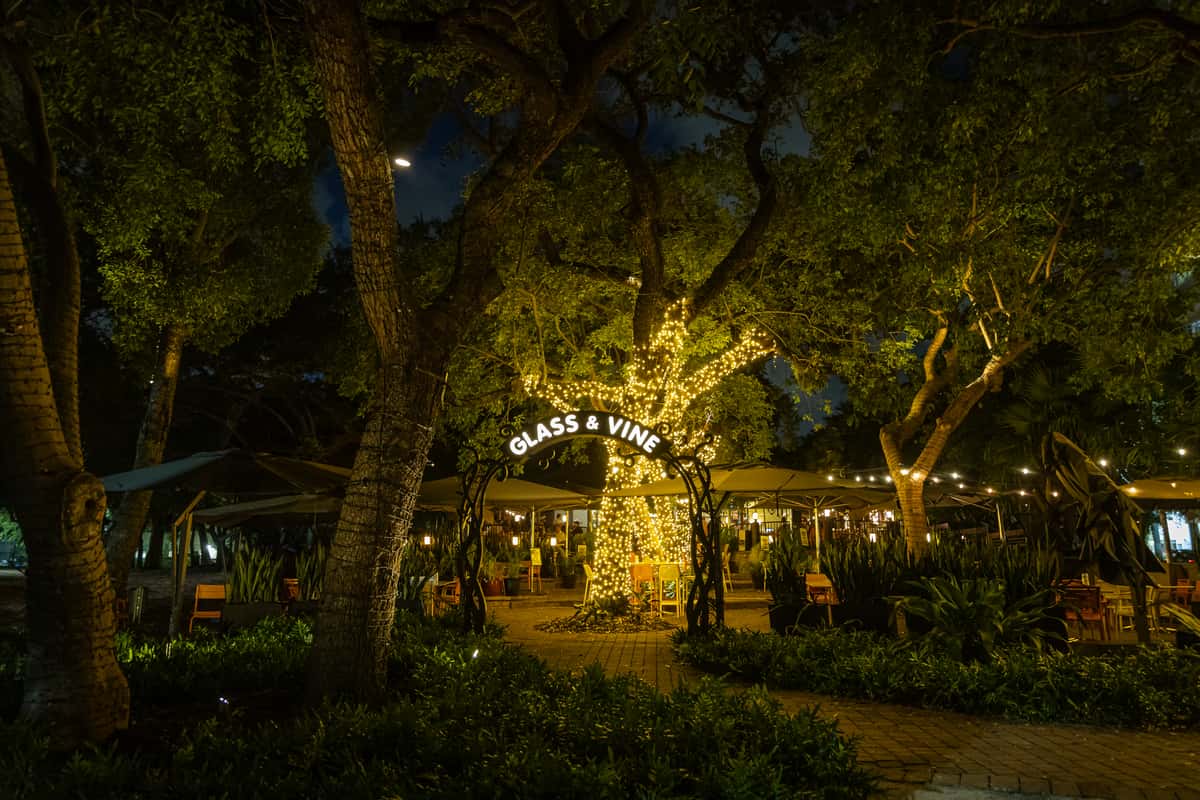
You can experience tropical ambiance at Glass and Vine by dining in a lush, open-air garden restaurant set beneath Peacock Park's oak canopy in Coconut Grove. The sections below cover what makes this setting distinctly tropical and the key takeaways about tropical ambiance venues.
What Makes an Open-Air Garden Restaurant in Coconut Grove Tropical?
An open-air garden restaurant in Coconut Grove becomes tropical through the combination of natural canopy shade, generous spacing, and organic materials suited to South Florida's climate. Glass and Vine sits beneath mature oaks in Peacock Park, where living tree cover provides natural cooling that enclosed dining rooms cannot replicate.
Thoughtful layout plays a critical role. According to Mist System's outdoor restaurant design guide, tropical heat makes tight spacing unbearable, and allowing 15 to 20 percent more space per cover than indoors is necessary, with a minimum of 90 cm between table edges to keep airflow circulating at guest level. This generous spacing lets warm breezes move freely through the garden seating area, keeping guests comfortable without mechanical cooling.
Natural materials reinforce the setting. Bamboo adds depth and character through large-scale backdrops and intricate lattice work that provides both visual impact and a sense of privacy. Combined with Coconut Grove's subtropical vegetation and Glass and Vine's garden-inspired design, these elements create an atmosphere that feels organically tropical rather than artificially themed.
What Are the Key Takeaways About What Defines a Tropical Ambiance Venue?
The key takeaways about what defines a tropical ambiance venue center on five principles:
- Vegetation is foundational. Lush landscaping and mature tree canopies create the immersive atmosphere that separates a tropical venue from one that merely decorates with palm prints.
- Airflow outranks aesthetics. Climate-responsive layout, generous table spacing, and open-air design determine guest comfort more than any decorative choice.
- Natural materials build authenticity. Teak, bamboo, and organic textures ground the space in its environment rather than competing with it.
- Sensory layers complete the experience. Warm lighting, tropical scents, curated music, and nature sounds work together to engage every sense beyond sight alone.
- Menu and setting must align. Locally sourced ingredients, shareable plates, and tropical cocktails reinforce the ambiance so the dining experience feels cohesive from first impression to final course.
Glass and Vine brings these principles together in Coconut Grove, offering an open-air garden setting where the food, the landscape, and the relaxed pace of service all reflect what makes a venue genuinely tropical.